
M3T’s Evidence of Impact
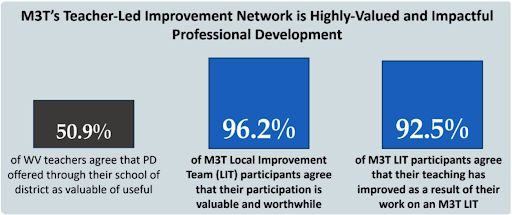
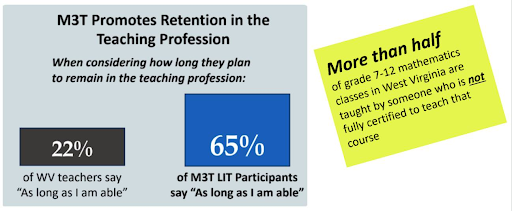
M3T’s focus starts on developing and retaining math teachers through relevant, valued, and teacher-led professional development (PD). M3T Participants report that they appreciate this approach to PD, that they are getting better at teaching, and that they are more likely to remain in the classroom.
“I have gotten more actionable benefit from collaborating with the local [Leadership Improvement Team] LIT and state teams through M3T than any combination of PD offered by my district so far. The bugs we work on are specific to our classrooms; the PDSA cycle data collection, analysis, and insights are specific to my students; and the solutions we create collaboratively are truly an example of ‘the whole is greater than the sum of the parts.’ Building the collaborative network and sharing ideas/resources with other math teachers throughout the state has been indispensable. In addition, this work is being recognized nationally, and it would be a disservice to our students and our faculty to cease supporting the progress being made.” – M3T participant
The changes M3T-participating teachers have made in the classrooms are changing how their students experience math class. Student surveys demonstrate that students in M3T classrooms are doing significantly more. They are:
- Sharing and explaining how they found answers with their classmates
- Defending approaches to solving math problems
- Listening to or reading what other students say about math, asking questions, and deciding if it makes sense.
- These critical thinking and problem solving skills, combined with greater math literacy, will serve them well as adults.
The final link in the causal chain of M3T is improved student math outcomes.
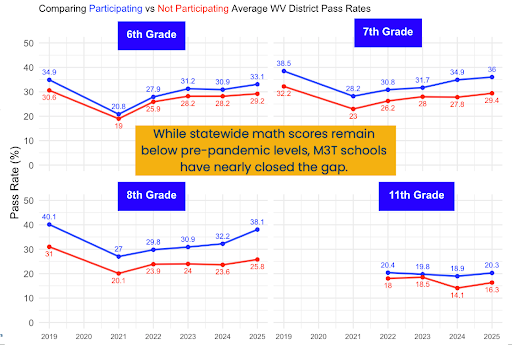
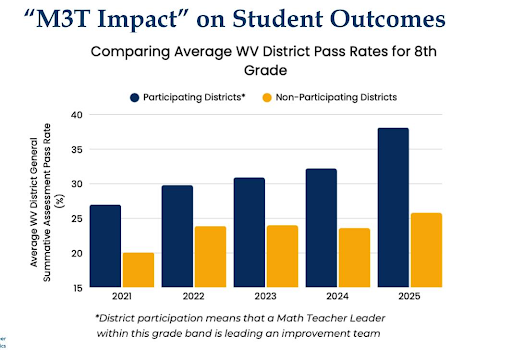
- M3T has improved student math outcomes in participating West Virginia school districts at a faster rate than non-participating districts.
- We see the benefits at all grade levels (6th – 12th grade), most marked at 8th grade